

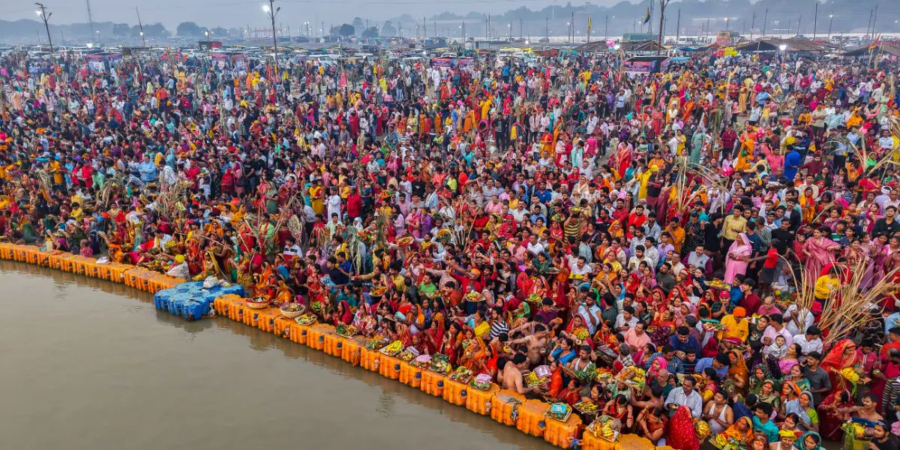
The Maha Kumbh Mela 2025, currently underway in Prayagraj, Uttar Pradesh, stands as a testament to India’s rich spiritual heritage, drawing millions of devotees from around the globe. This 45-day event, spanning from January 13 to February 26, 2025, is anticipated to attract over 400 million visitors, making it the largest religious gathering in the world.
Inauguration and Significance
The festival commenced on January 13, 2025, coinciding with Paush Purnima, a day considered highly auspicious in Hindu tradition. On this inaugural day, approximately 16 million devotees took the holy dip at the Triveni Sangam—the confluence of the Ganga, Yamuna, and the mythical Saraswati rivers. This year’s Maha Kumbh holds exceptional significance due to a rare celestial alignment of Pushya Nakshatra, an occurrence that happens once every 144 years, adding to the spiritual fervor of the event.
Technological Advancements for Safety
To manage the massive influx of pilgrims and ensure their safety, authorities have implemented advanced technological measures. The event has been dubbed the ‘Digital Maha Kumbh’ due to the integration of state-of-the-art technologies. Over 2,700 CCTV cameras equipped with artificial intelligence capabilities have been deployed for real-time monitoring. Facial recognition technology is utilized at entry points to enhance security, and underwater drones capable of diving up to 100 meters provide round-the-clock surveillance at the Sangam area. Additionally, multilingual chatbots on the Kumbh app assist visitors with information and guidance.

Infrastructure Developments
Significant infrastructure projects have been undertaken to accommodate the vast number of attendees. A 15.25 km riverfront along the Ganga, modeled after Mumbai’s Marine Drive, has been developed to ease traffic congestion and enhance the visitor experience. This riverfront includes amenities such as selfie points, restaurants, and cafeterias, providing a refreshing environment for pilgrims. The construction of 30 pontoon bridges and the renovation of 92 roads are also part of the extensive preparations to ensure smooth movement and accessibility within the city.
Challenges and Tragic Incidents
Despite meticulous planning, the festival has faced challenges. On January 29, 2025, a tragic stampede occurred during a significant bathing day, resulting in the deaths of at least 38 individuals, with many more injured. The incident took place early in the morning as crowds surged forward to bathe at the confluence of the rivers. Security personnel struggled to manage the overwhelming number of pilgrims, leading to multiple stampedes. Authorities are investigating the cause of the incident and have urged pilgrims to remain calm and follow safety protocols.
Economic Impact
The Maha Kumbh Mela is not only a spiritual gathering but also a significant economic event. The budget for this year’s festival is estimated at $800 million, with a projected economic boost of $30 billion to $35 billion. Local businesses, including those selling Mahakumbh-themed products like diaries, calendars, jute bags, and stationery, have reported a surge in sales, contributing to the economic upliftment of the region.
Cultural and Spiritual Essence
The Maha Kumbh Mela embodies India’s timeless spiritual heritage, bringing together countless people in a sacred confluence of faith, devotion, and culture. The festival features several significant bathing rituals (Shahi Snans) on key dates, including Makar Sankranti (January 14), Mauni Amavasya (January 29), Basant Panchami (February 3), Magh Poornima (February 12), and Mahashivratri (February 26). These rituals are believed to absolve participants of sins and grant them salvation, underscoring the deep spiritual significance of the event.
As the Maha Kumbh Mela 2025 continues, it remains a profound manifestation of India’s cultural and spiritual ethos, drawing millions in a collective expression of faith and devotion.
The primary location for these rituals is the Triveni Sangam in Prayagraj, the sacred confluence of the Ganga, Yamuna, and the mythical Saraswati rivers. Pilgrims gather here to perform the holy dip, believing it purifies the soul and absolves sins.

Leave a Reply