


Notre Dame Football: A Legacy of Excellence and Tradition
Notre Dame football holds a special place in the hearts of sports enthusiasts and college football fans across the United States. With a storied history, iconic players, legendary coaches, and a tradition steeped in success, the Fighting Irish have become synonymous with excellence in collegiate athletics. This article delves deep into the history, culture, and significance of Notre Dame football, capturing the essence of what makes this program one of the most celebrated in the nation.
The Origins of Notre Dame Football
The University of Notre Dame, located in South Bend, Indiana, played its first football game in 1887. What began as a modest athletic endeavor quickly grew into one of the most prominent programs in college sports. By the early 20th century, Notre Dame had already established itself as a force to be reckoned with, thanks to its relentless pursuit of excellence and its ability to adapt to the changing landscape of the sport.
The program’s rise to prominence coincided with the leadership of Knute Rockne, a name forever etched in the annals of football history. Serving as head coach from 1918 to 1930, Rockne led the team to an impressive 105-12-5 record. Under his guidance, Notre Dame introduced innovative strategies, including the famous forward pass, which revolutionized the game and cemented the university’s reputation as a football powerhouse.
Iconic Players and Coaches
Notre Dame football is synonymous with legendary figures who have left an indelible mark on the sport. From players who dazzled fans with their skills to coaches who masterminded unforgettable victories, the program has been a breeding ground for greatness.
- Knute Rockne: Beyond his coaching record, Rockne’s legacy includes his motivational speeches and his role in popularizing college football nationwide.
- George Gipp: Known as “The Gipper,” Gipp’s remarkable athleticism and tragic death in 1920 inspired one of the most famous rallying cries in sports history: “Win one for the Gipper.”
- Ara Parseghian: Serving as head coach from 1964 to 1974, Parseghian brought two national championships to Notre Dame and restored the program’s prestige.
- Lou Holtz: A beloved figure in Notre Dame lore, Holtz led the team to its last national championship in 1988.
- Joe Montana: Before his Hall of Fame NFL career, Montana showcased his talent as a quarterback for the Fighting Irish, leading them to a national title in 1977.
Tradition and Symbolism
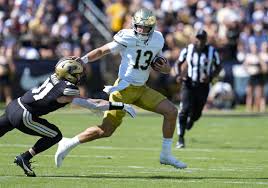
Notre Dame football is steeped in traditions that embody the spirit of the university and its commitment to excellence. From the iconic golden helmets to the rousing strains of the Notre Dame Victory March, every aspect of game day is a celebration of heritage and pride.
- The Golden Dome: Overlooking the campus, the Golden Dome serves as a beacon of inspiration for players and fans alike.
- The Leprechaun Mascot: As a symbol of fighting spirit, the Leprechaun energizes the crowd and adds a touch of Irish flair to the festivities.
- Touchdown Jesus: The iconic mural of Christ raising his arms in a gesture reminiscent of a referee’s touchdown signal is visible from Notre Dame Stadium, creating a unique and spiritual connection to the game.
- The Player’s Walk: Before every home game, players walk through a sea of cheering fans, fostering a deep bond between the team and its supporters.
Rivalries and Memorable Games
Notre Dame’s storied history is punctuated by intense rivalries and unforgettable games that have shaped the narrative of college football. The Fighting Irish’s matchups against teams like USC, Michigan, and Navy are the stuff of legends.
- Notre Dame vs. USC: Known as the “Battle for the Jeweled Shillelagh,” this annual clash is one of college football’s most storied rivalries.
- Notre Dame vs. Michigan: Two historic programs with a deep mutual respect, their games are often high-stakes affairs with national implications.
- Notre Dame vs. Navy: This rivalry is rooted in tradition and mutual appreciation, dating back to the early days of college football.
One of the most memorable games in Notre Dame history occurred in 1988 when the Irish defeated the Miami Hurricanes in what became known as the “Catholics vs. Convicts” game. The high-stakes matchup and Notre Dame’s dramatic victory remain etched in college football lore.
Modern-Day Notre Dame Football
While the glory days of the mid-20th century may seem distant, Notre Dame football remains a formidable force in modern college athletics. The program has consistently competed at a high level, earning spots in prestigious bowl games and making appearances in the College Football Playoff.
Under the leadership of coaches like Brian Kelly and Marcus Freeman, Notre Dame has embraced innovation while staying true to its roots. The team’s commitment to academic excellence and sportsmanship continues to set it apart in the competitive world of college football.
The Role of Faith and Academics
One of the unique aspects of Notre Dame football is its integration of faith and academics into the athletic experience. As a Catholic institution, the university emphasizes the importance of character development, ethical leadership, and community service. Players are not only expected to excel on the field but also to uphold the values that define Notre Dame’s mission.
The program’s focus on academics is reflected in its high graduation rates and the success of its alumni in various fields beyond football. This holistic approach to student-athlete development underscores the university’s commitment to shaping well-rounded individuals.
The Future of Notre Dame Football
As college football continues to evolve, Notre Dame faces the challenge of balancing tradition with the demands of a rapidly changing landscape. The introduction of Name, Image, and Likeness (NIL) opportunities, conference realignments, and advancements in sports technology are reshaping the game.
Despite these challenges, Notre Dame’s commitment to excellence and its storied legacy position it for continued success. The program’s ability to adapt while preserving its core values ensures that it will remain a cornerstone of college football for generations to come.
Conclusion
Notre Dame football is more than just a game; it is a symbol of tradition, excellence, and resilience. From its humble beginnings to its status as a national powerhouse, the program has captured the hearts of fans and inspired countless individuals. As the Fighting Irish look to the future, their legacy as one of the most storied programs in sports history remains unwavering.
Whether you are a die-hard fan or a casual observer, the magic of Notre Dame football is undeniable. It represents the triumph of hard work, the power of unity, and the enduring spirit of competition. Go Irish!

Leave a Reply